A Cybertruck camper concept for digital nomads — a portable space for work, rest, play, connection, and expression. Mobility and hospitality collapsed into one object.
Digital nomads are remote workers who travel to different locations on a regular basis and use modern technology to do their work from anywhere.
The number of digital nomads has grown to more than 15.5 million in the U.S. alone in the past year. Countries like Portugal, Thailand, and Mexico are issuing Digital Nomad visas to attract foreign talent.
But being a digital nomad is also challenging. Traveling on a regular basis is expensive, and finding work–life balance on the road is genuinely difficult. This project asked what the logical next step for auto-mobiles looks like once they have to start behaving like social-mobiles — vehicles you live with, not just drive.
Kevin Cho. 28 years old. Freelance architect. The outdoorsy digital nomad.
Values: Flexibility from work · Experience-focused travel · Meeting new cultures and people.
Friction: Traveling on a regular basis is expensive. Finding work–life balance on the road is difficult. Most "remote work setups" still assume a coffee shop, a coworking space, or a hotel room — none of which travel with you.
Mapping Kevin's typical trip surfaced where the existing system falls apart: flights stack up, accommodation eats the budget, work and rest fight over the same surfaces, and any "office" he carries lives in a backpack.
The user journey pointed at Camper Living / Traveling as the natural answer — a vehicle that already moves you to the next place, but that doubles as the workspace, kitchen, and bed once you get there. A subscription model — Purchase → Arrive → Pick up → Return — would let nomads access it without buying a vehicle outright.
This project investigates logical next-step approaches to transferring auto-mobiles into social-mobiles — a camper as a portable space for work, rest, play, connection, and expression. Mobility and hospitality as one.
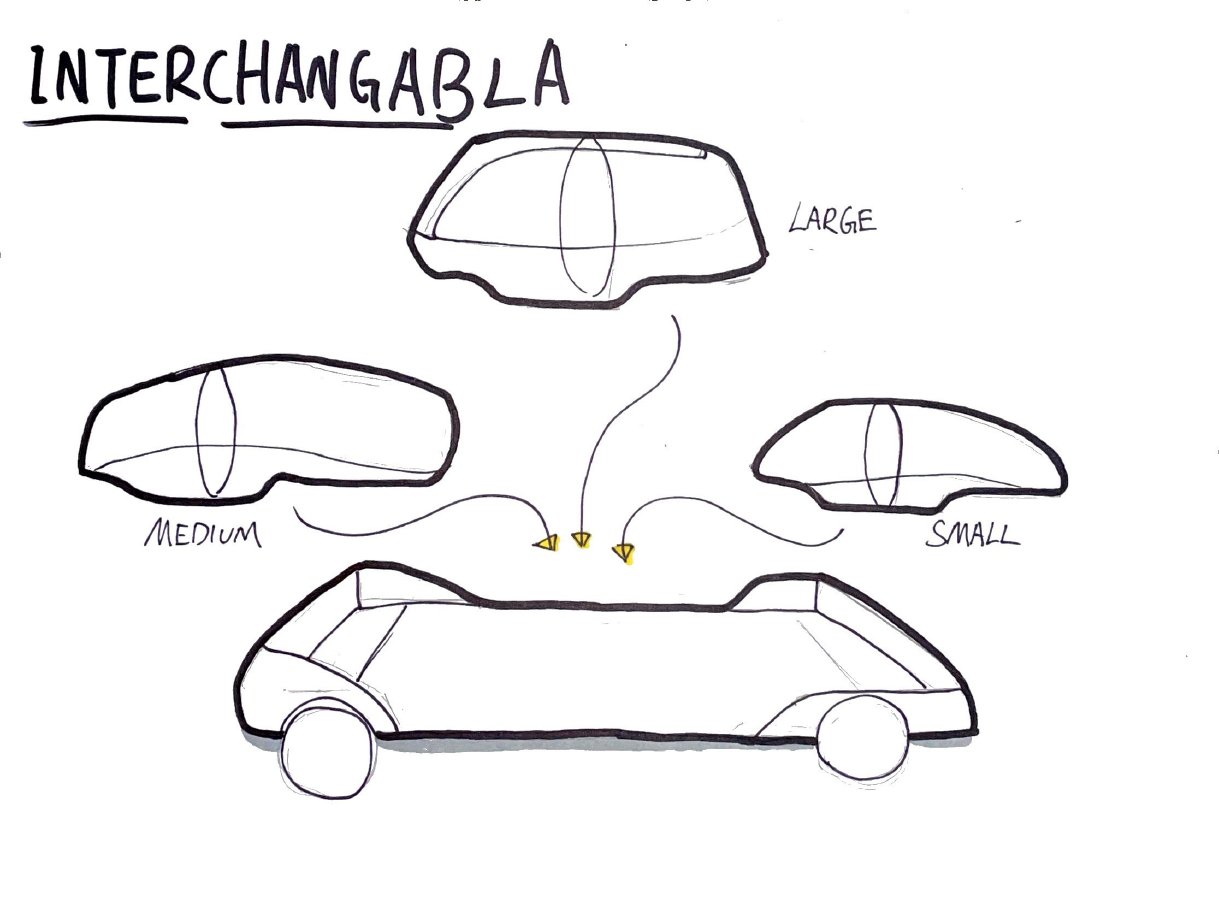
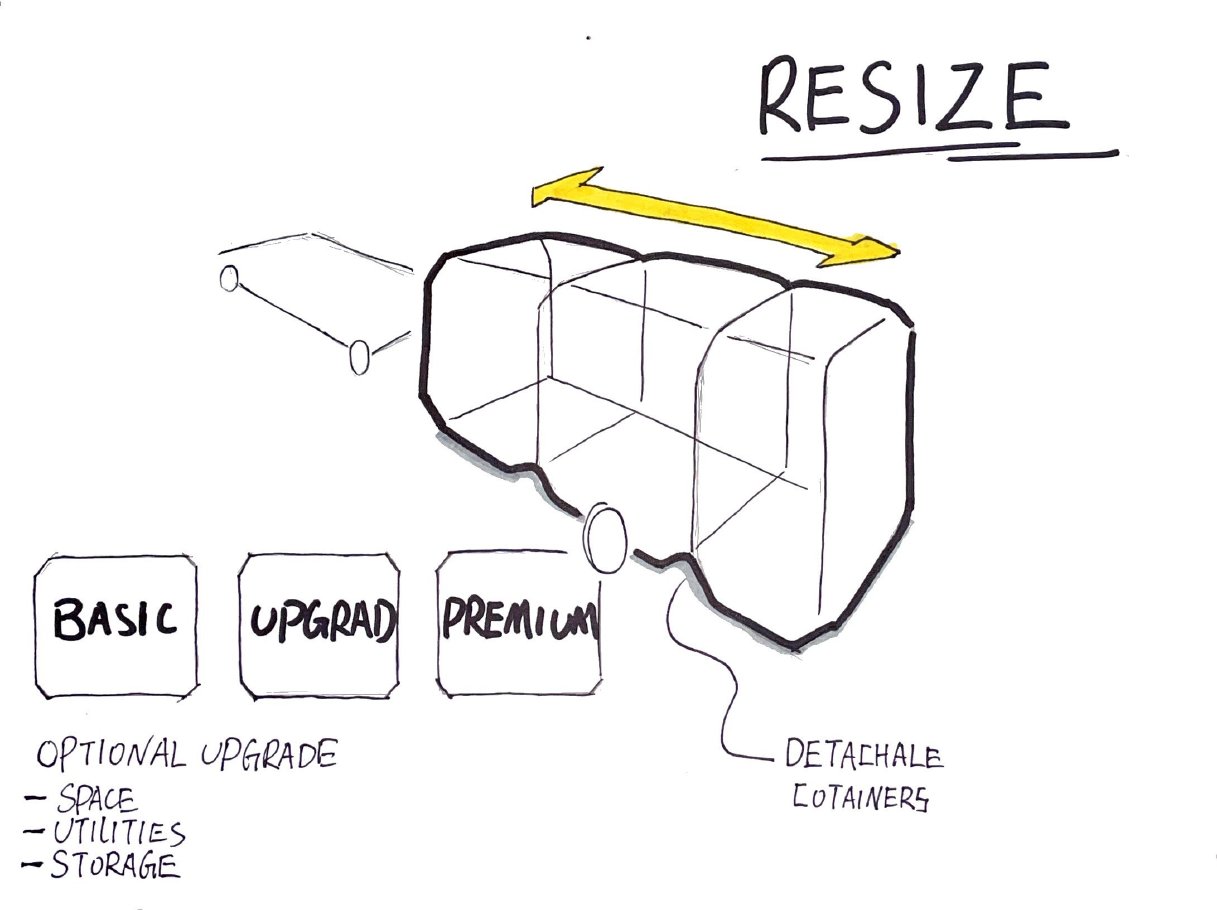
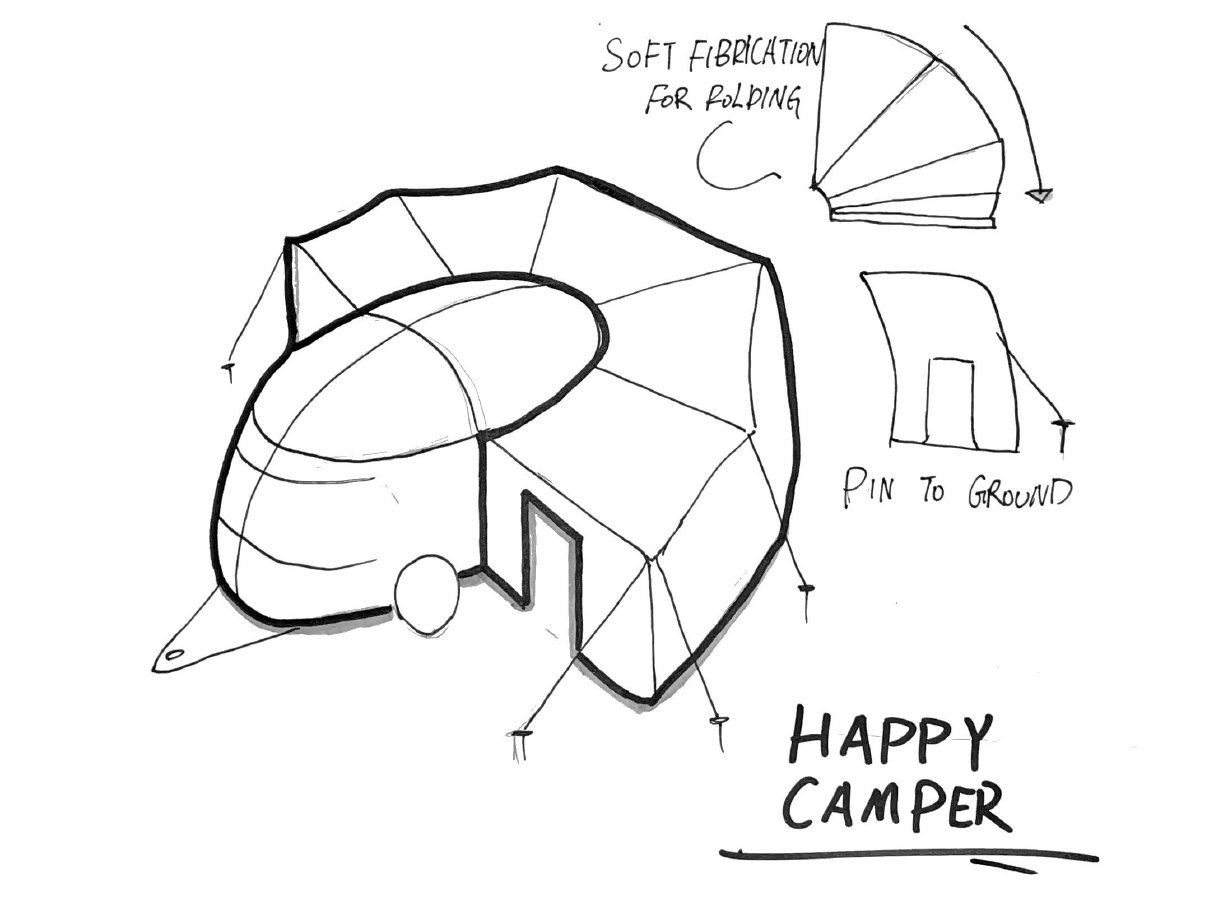
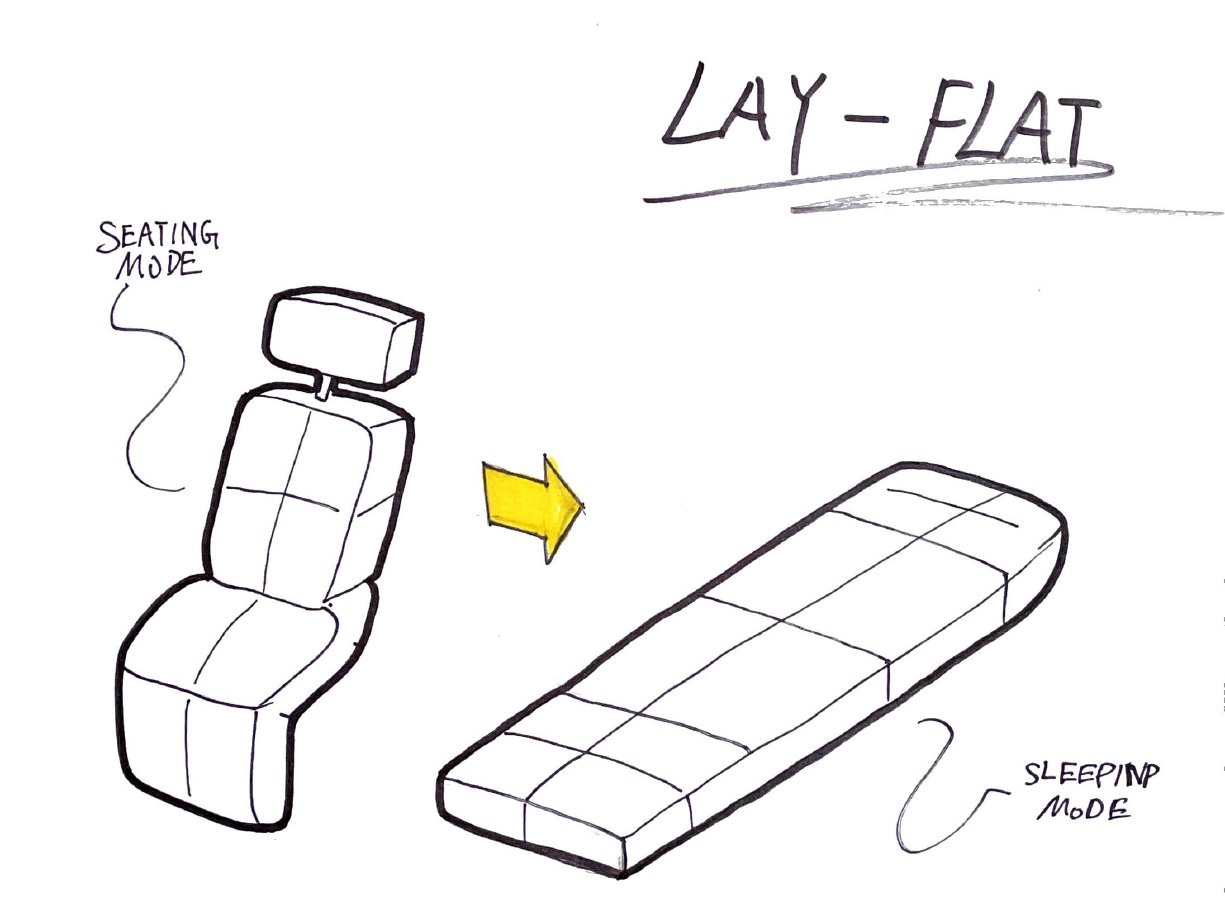
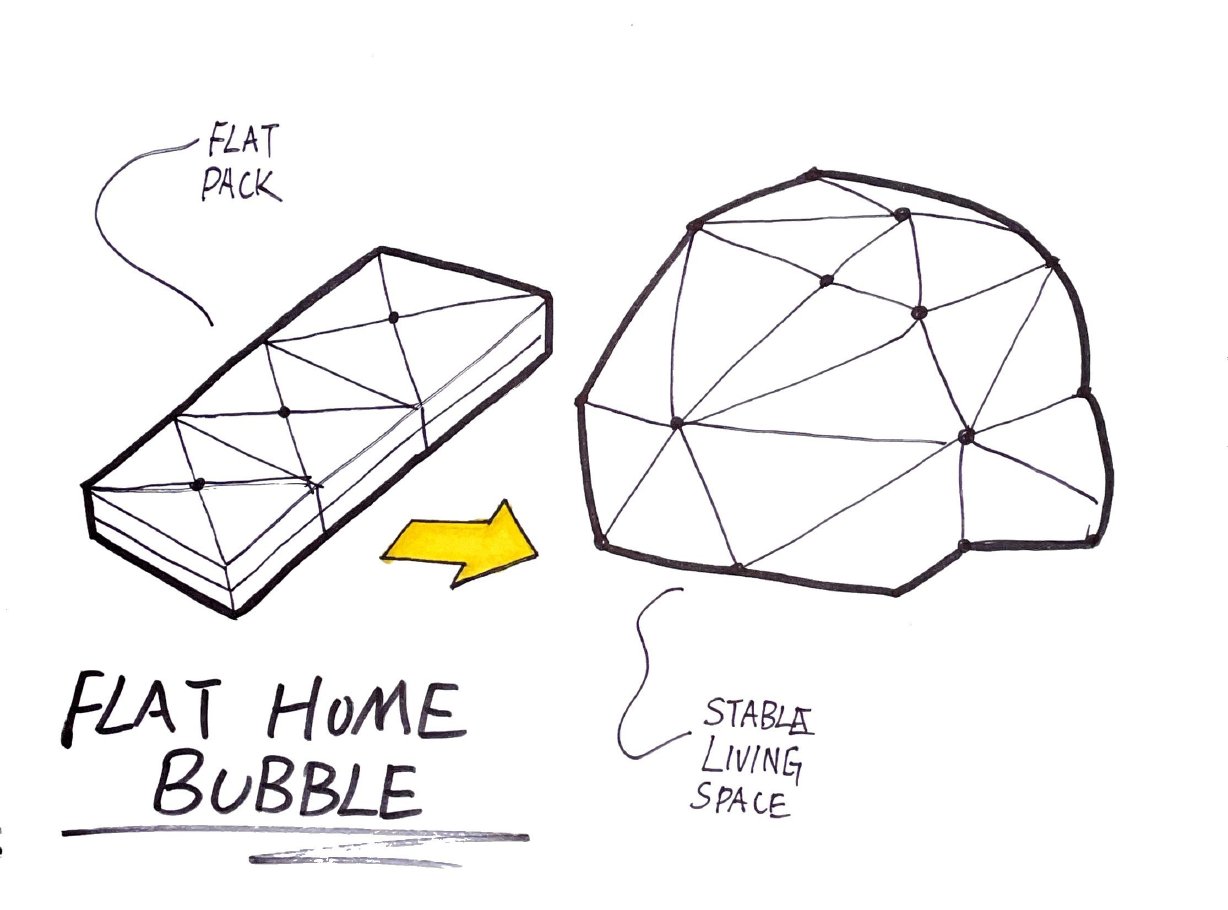
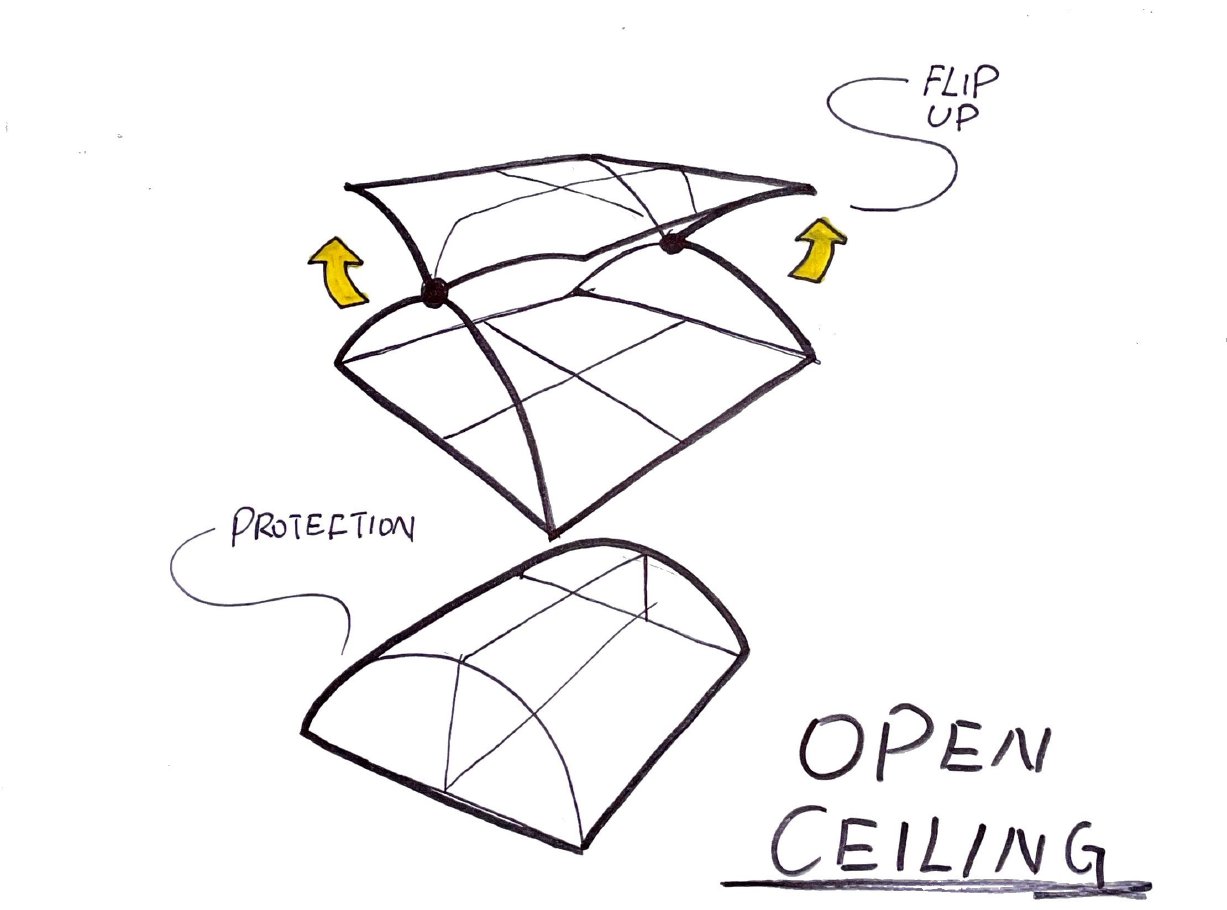
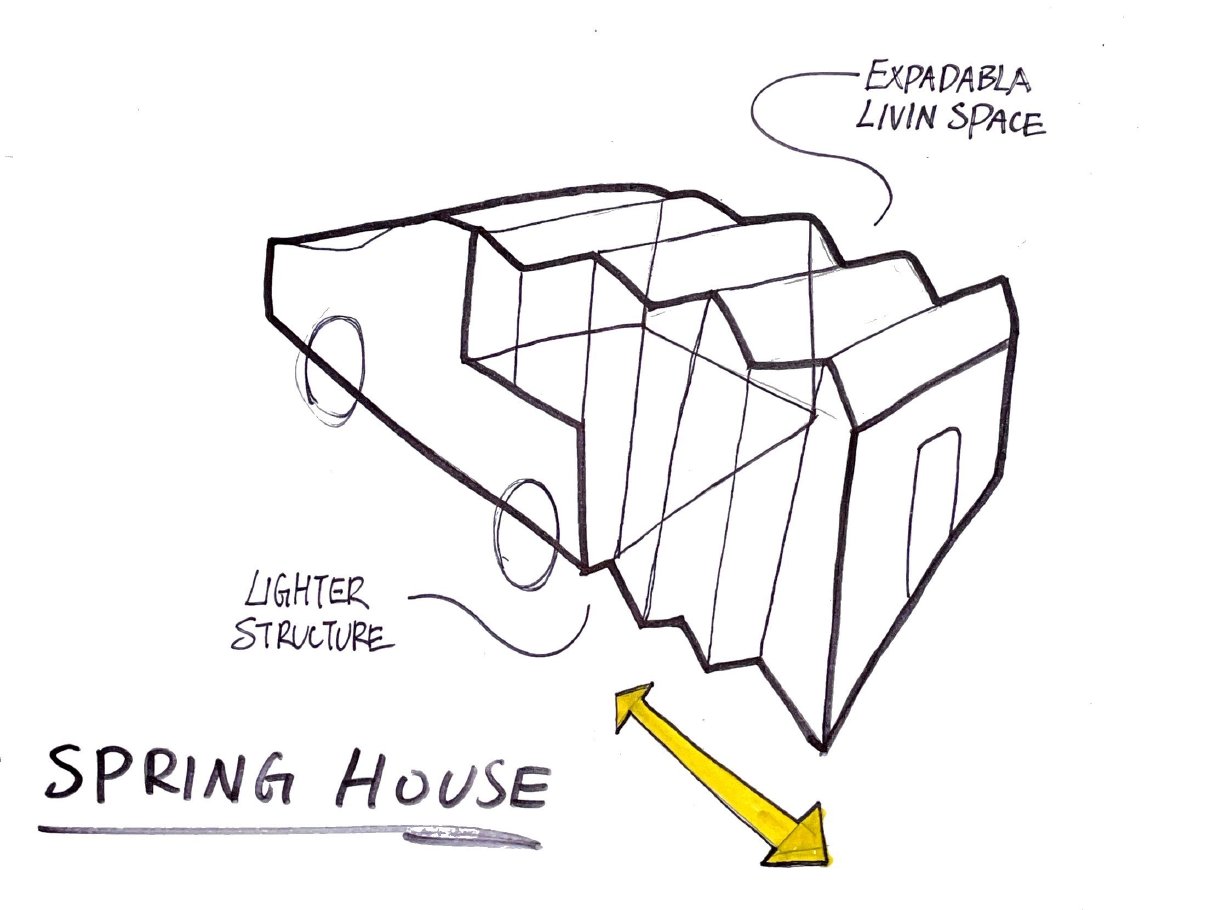
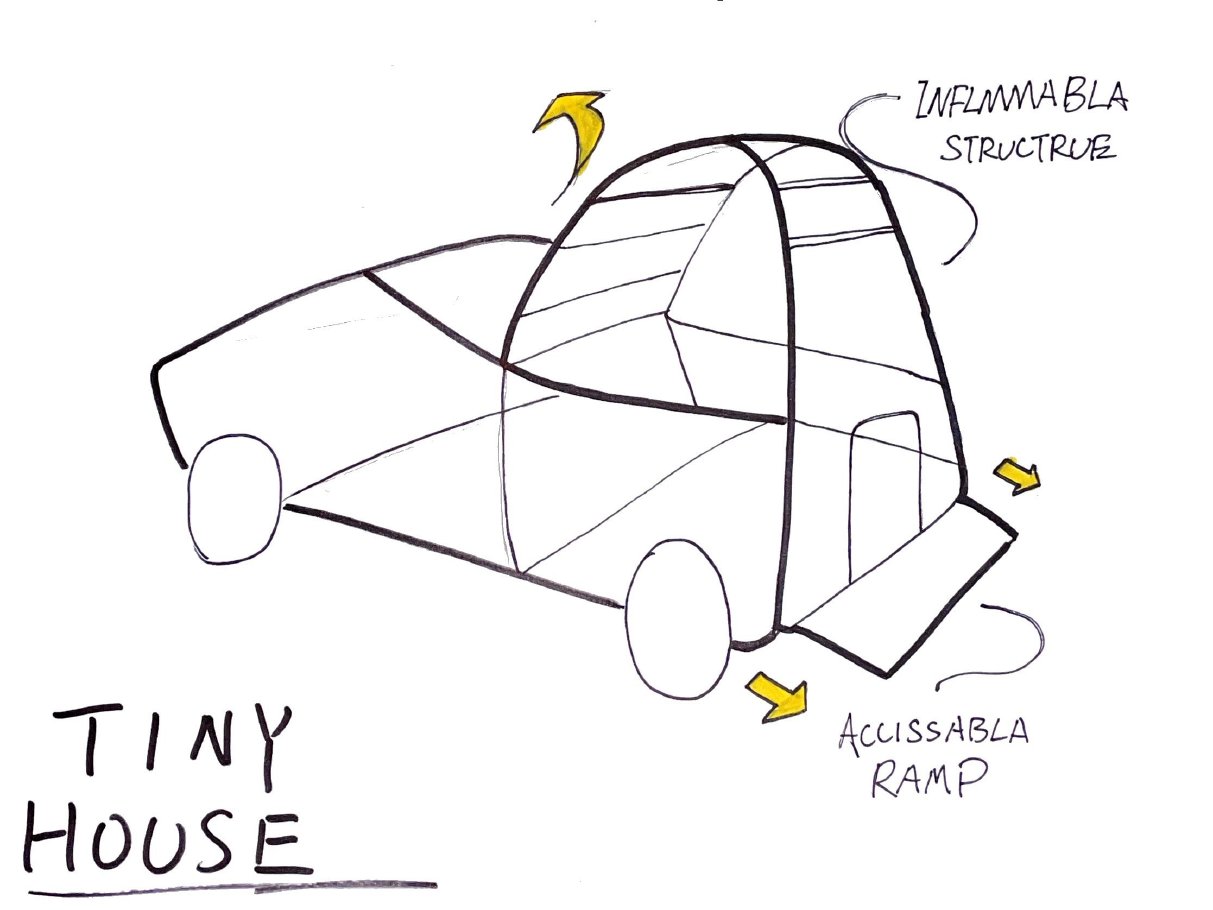
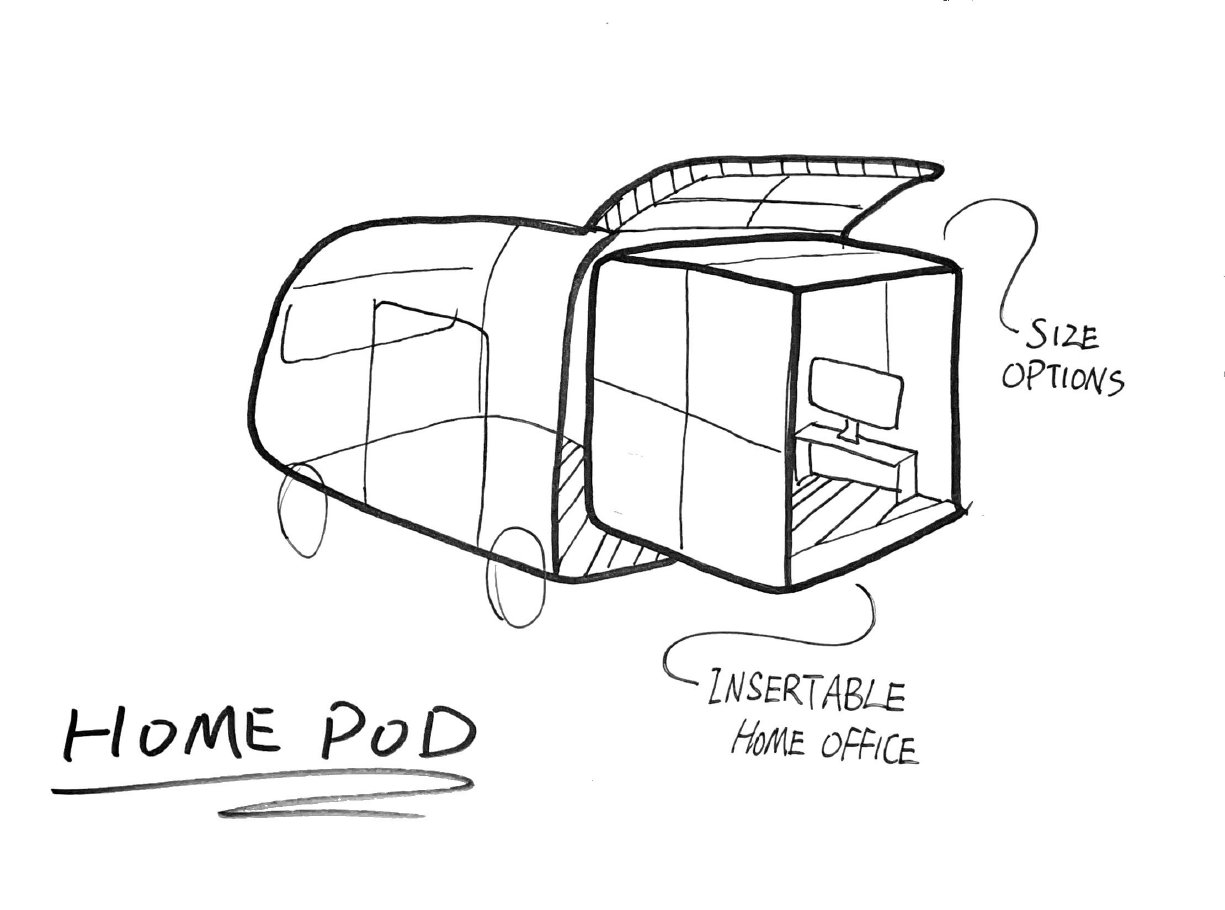
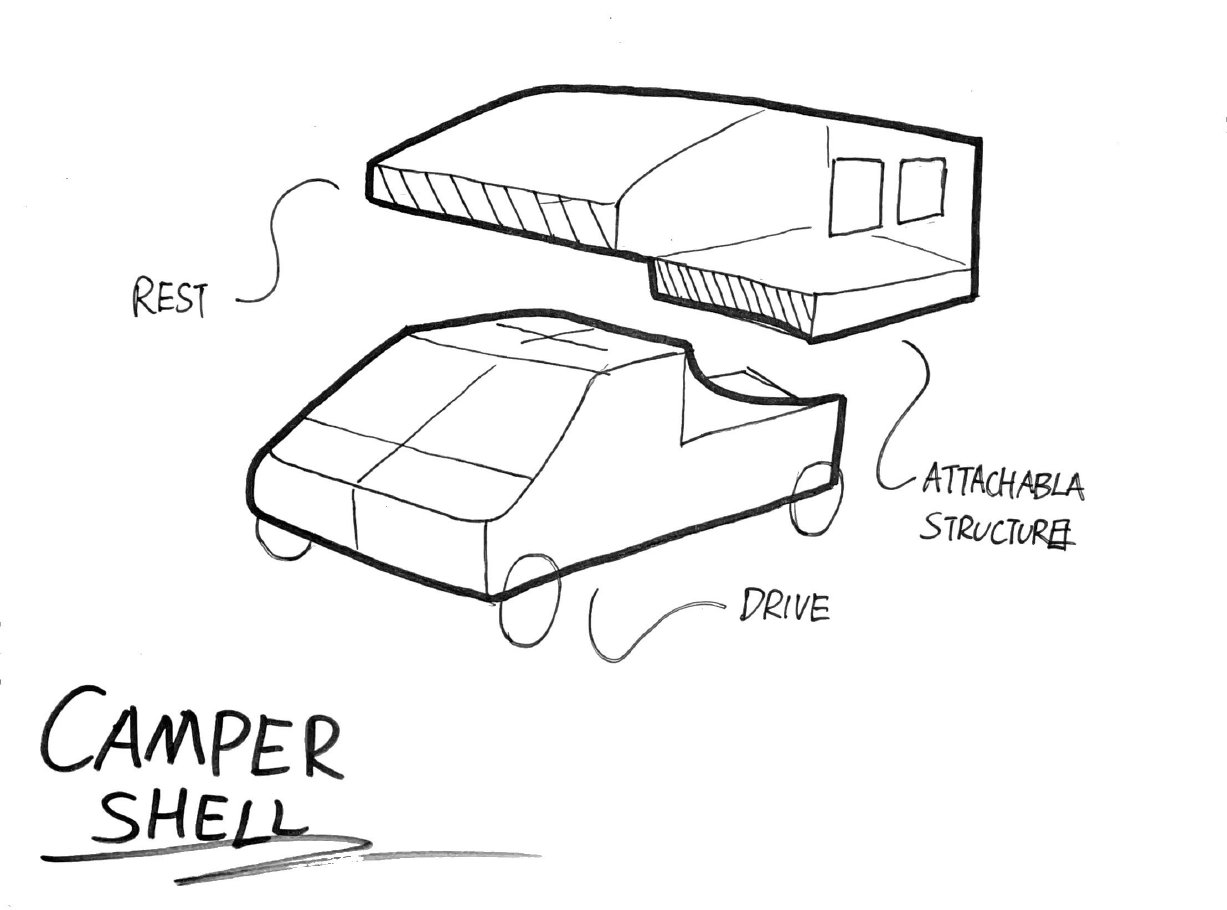
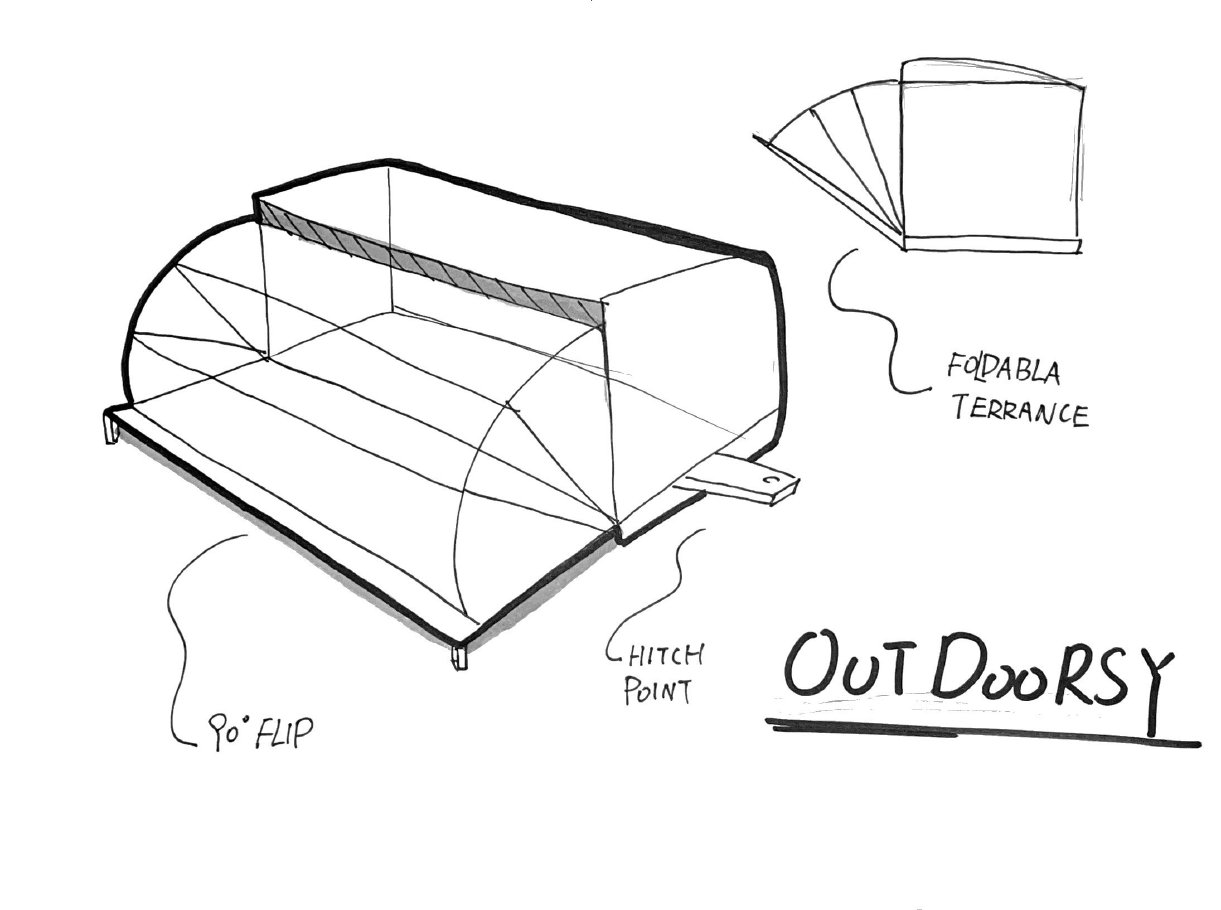
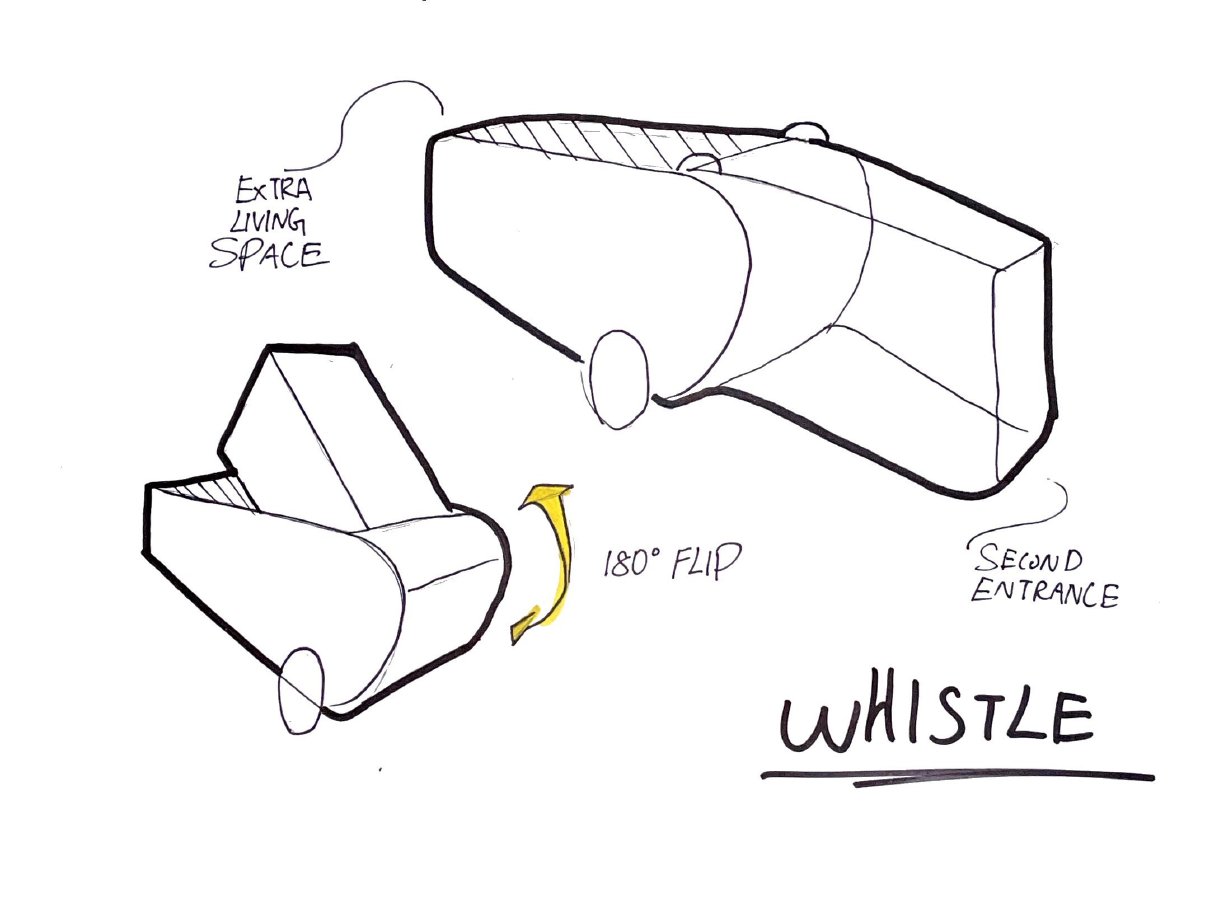
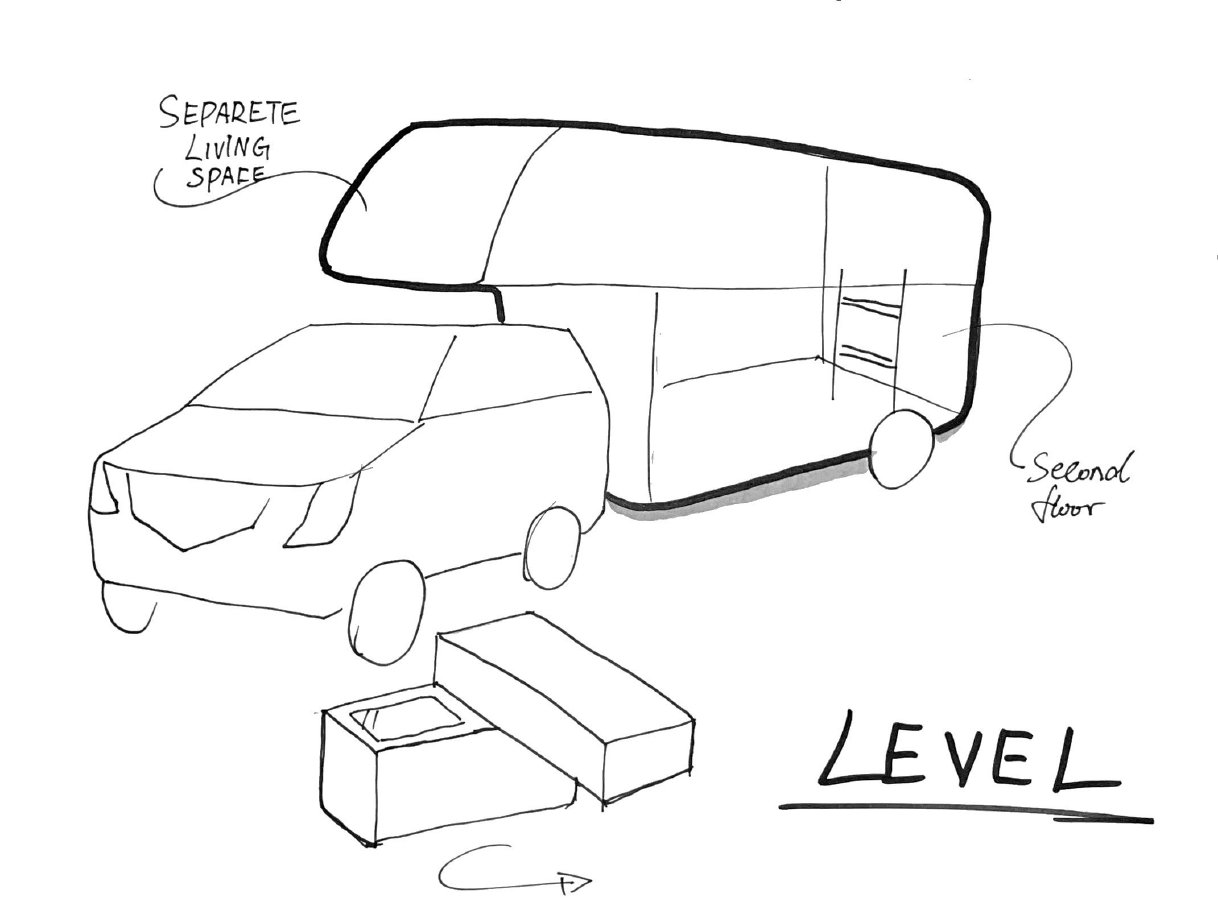
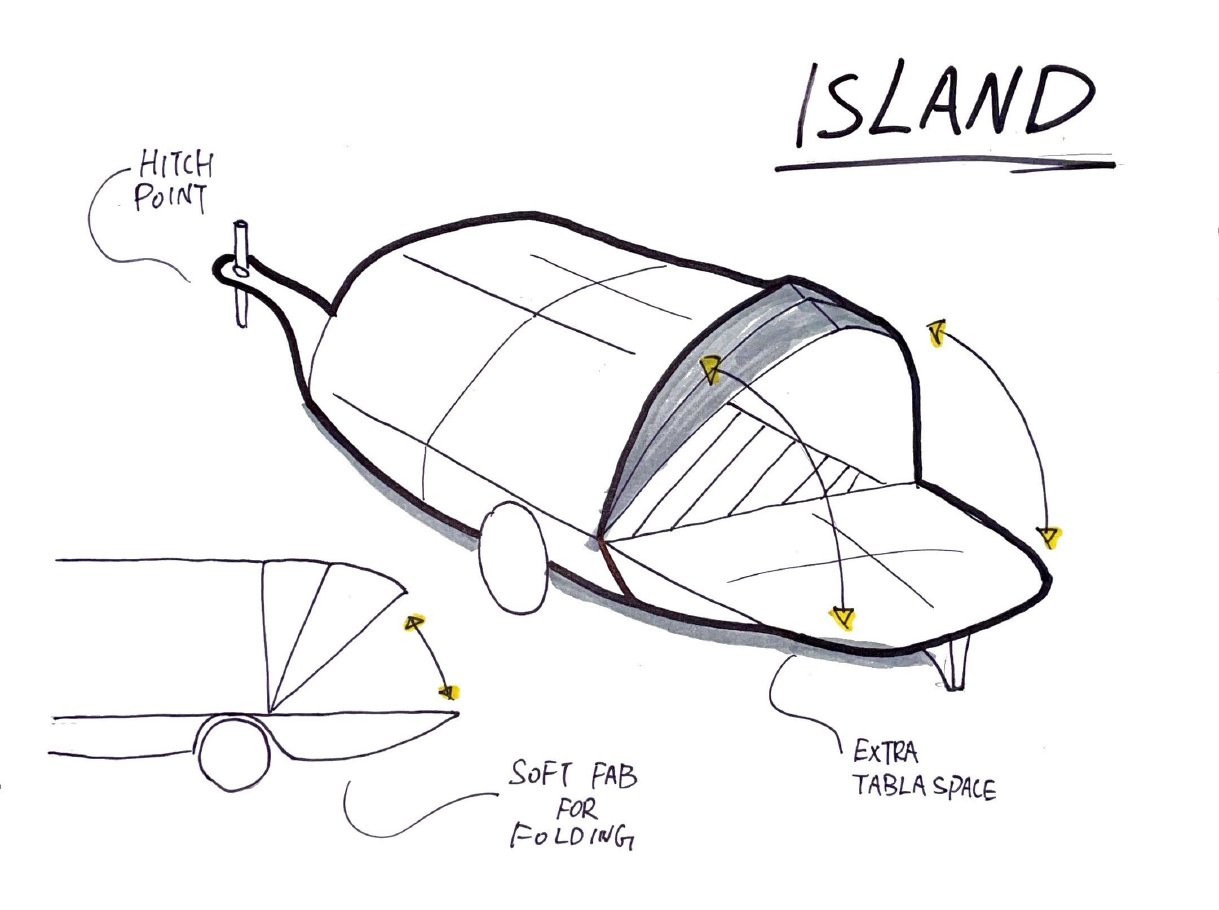
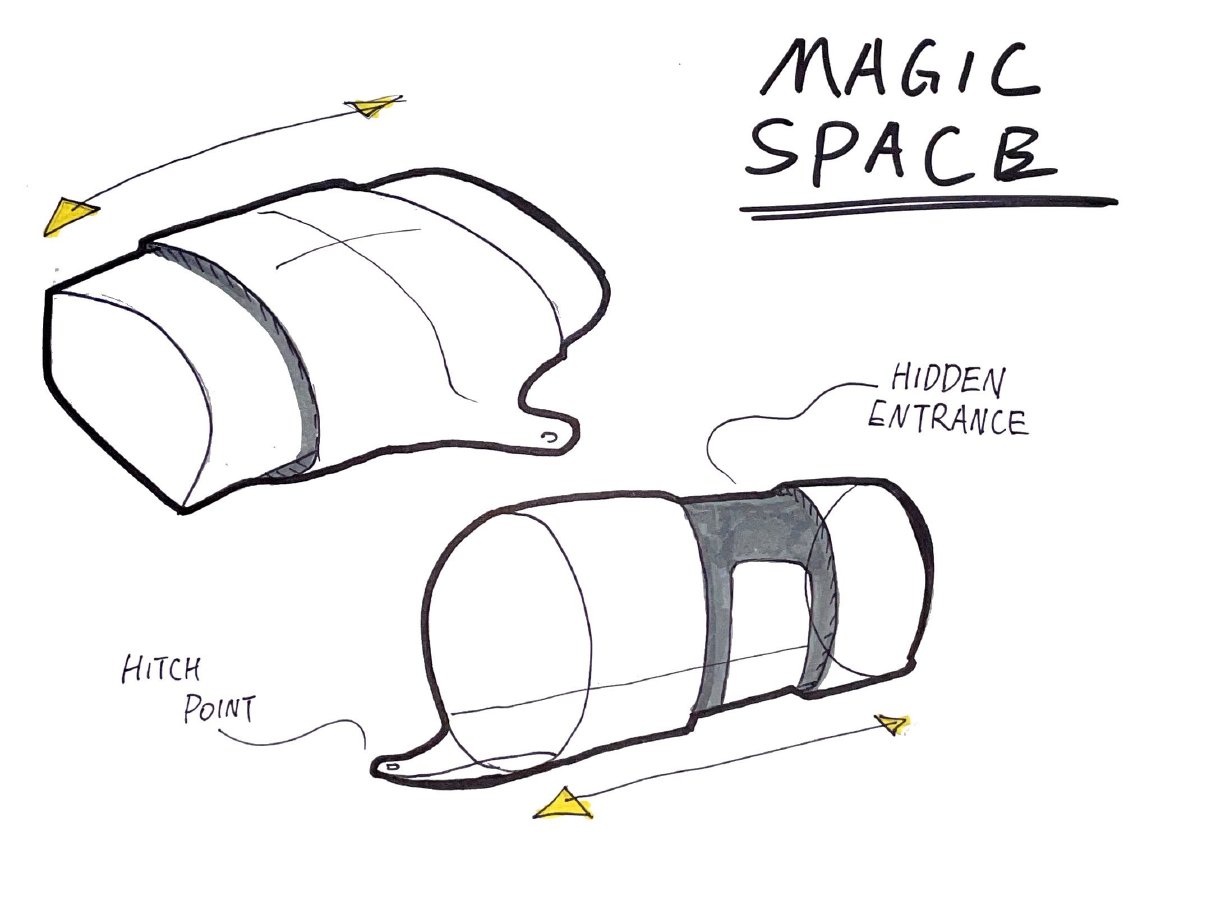
The investigation opened on paper, with a wide ideation round. Fifteen sketches, each isolating one variable to push on — modularity, scale, conversion, soft fabrication, attachable shells, expandable structures.
The exercise wasn't about picking a winner. It was about mapping the space of what a Tesla-grade camper could become if no current product format was taken for granted.
Out of the wide field, three ideas held up: interchangeable scale, a single space that reconfigures from day to night, and a hospitality-grade interior. Those three ideas became the brief for the refined concept — and the Tesla Cybertruck became the base vehicle.
The Cybertruck arrives with a form language that already feels architectural — flat planes, stainless steel, a silhouette built more like a structure than a vehicle. That made it the right starting point: a base that could host a livable interior without the camper bolt-on reading as an afterthought.
Drive for innovation. Respect. Exceptional performance. A space of operating.
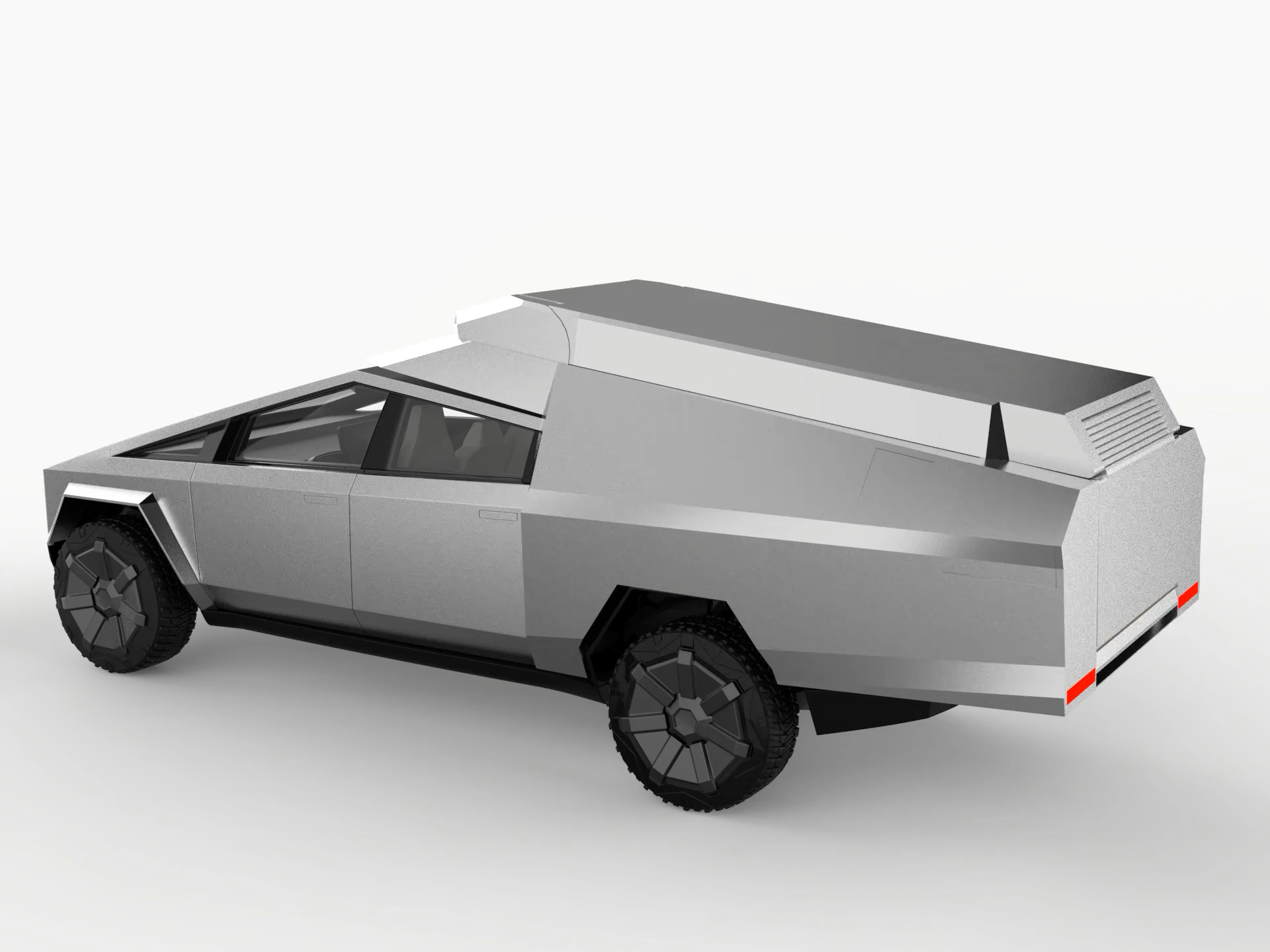
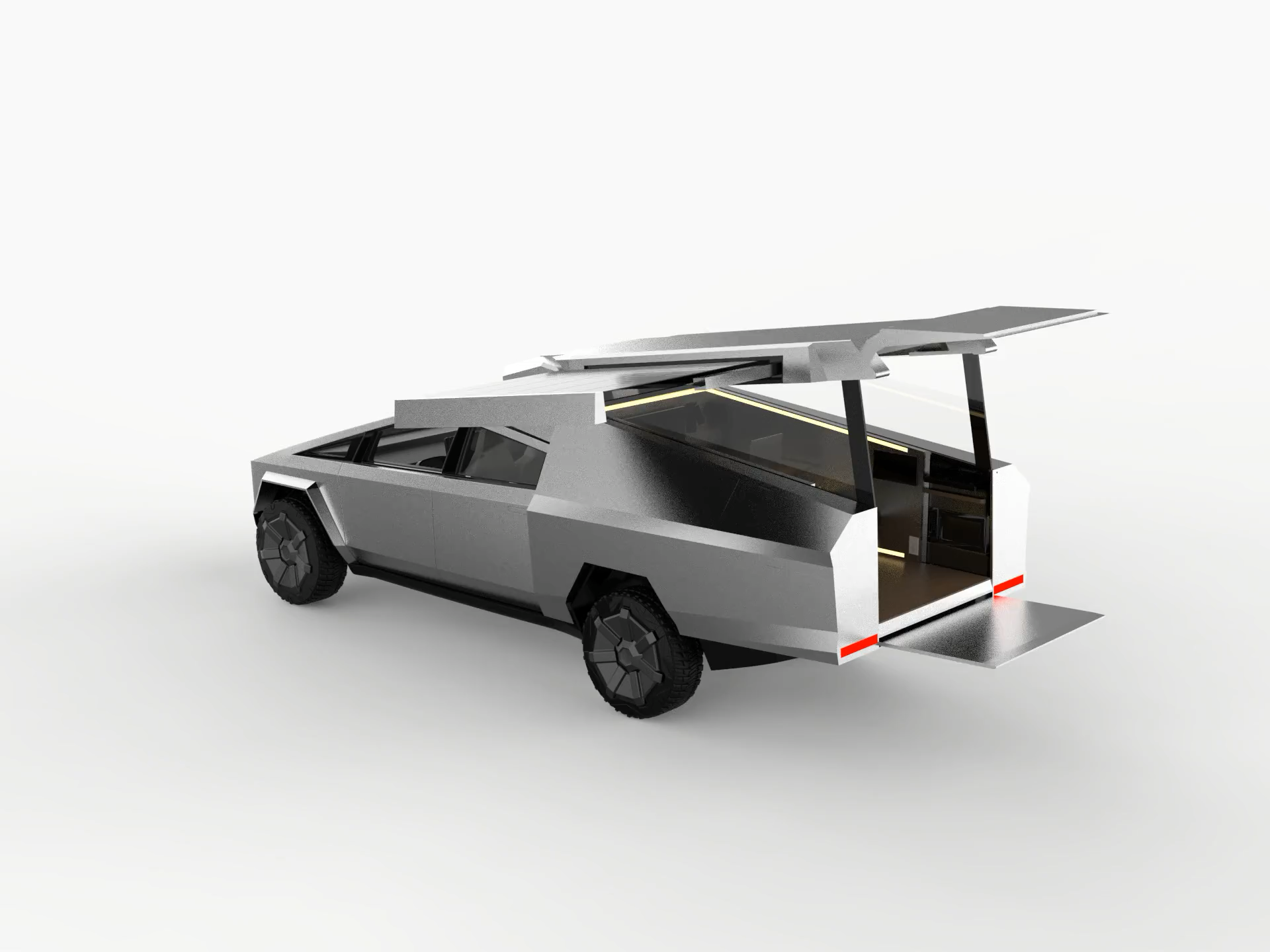
The camper opens in stages — a single linear movement from closed driving silhouette to fully-deployed living space.
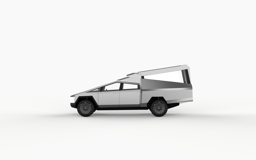
A workspace. Convertible dining table, power outlets, internet connection, and a food prep / kitchen area sized for one or two people working through a long day.
Roof-integrated solar feeds the cabin's outlets and a working faucet, so the camper can park anywhere and still function as an office.


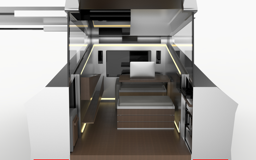
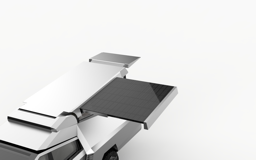
The same surfaces reconfigure for sleep. A convertible table-to-bed, a night stand, and ambient lighting tuned for the desert dark.
The Cybertruck's stainless exoskeleton language carries into the interior — hard-wearing surfaces, exposed framing, and a material story that doesn't pretend to be a hotel room.


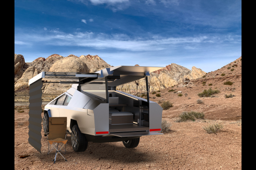
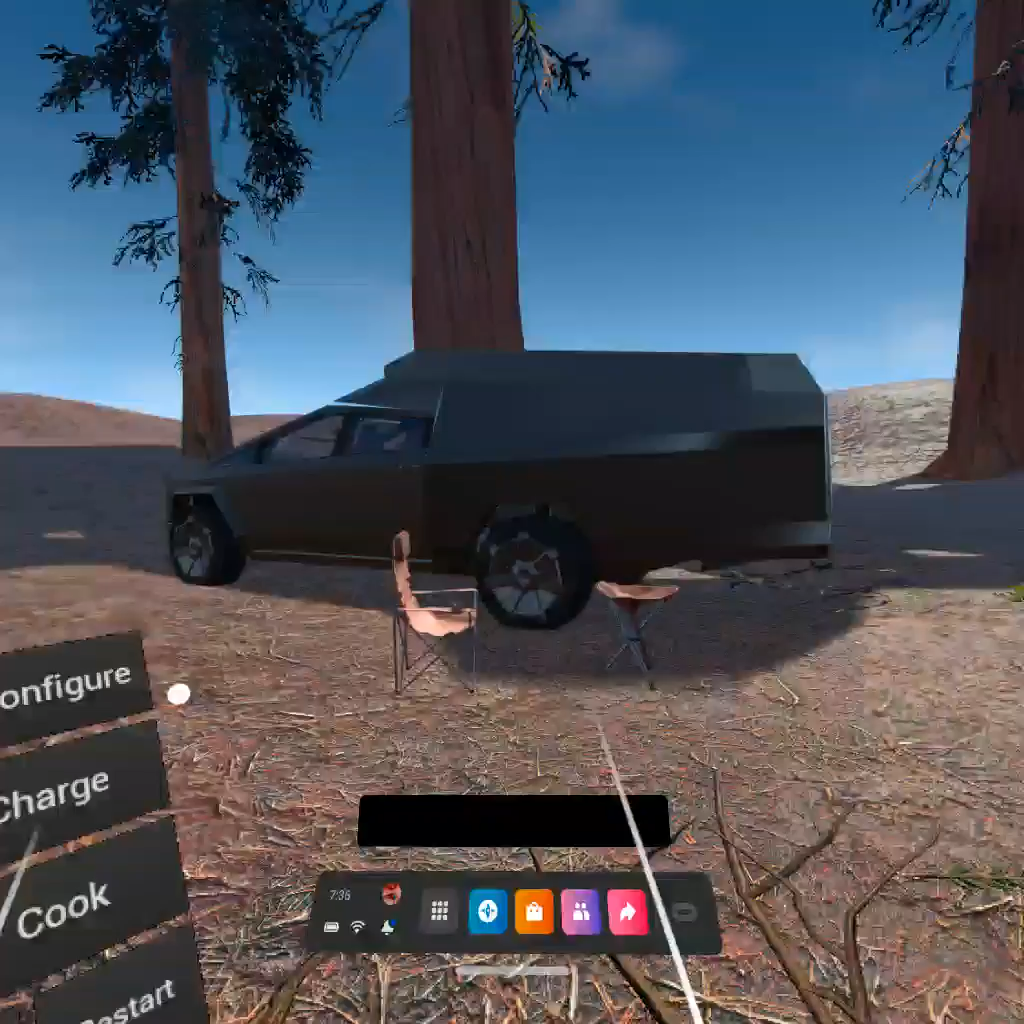
The camper is paired with a Tesla-style companion app that reaches into AR — letting the nomad configure, charge, cook, and reset the cabin from outside the vehicle.
A neumorphic UI sits in front of the live AR view of the camper, so a single glance shows both the physical object and its current state.